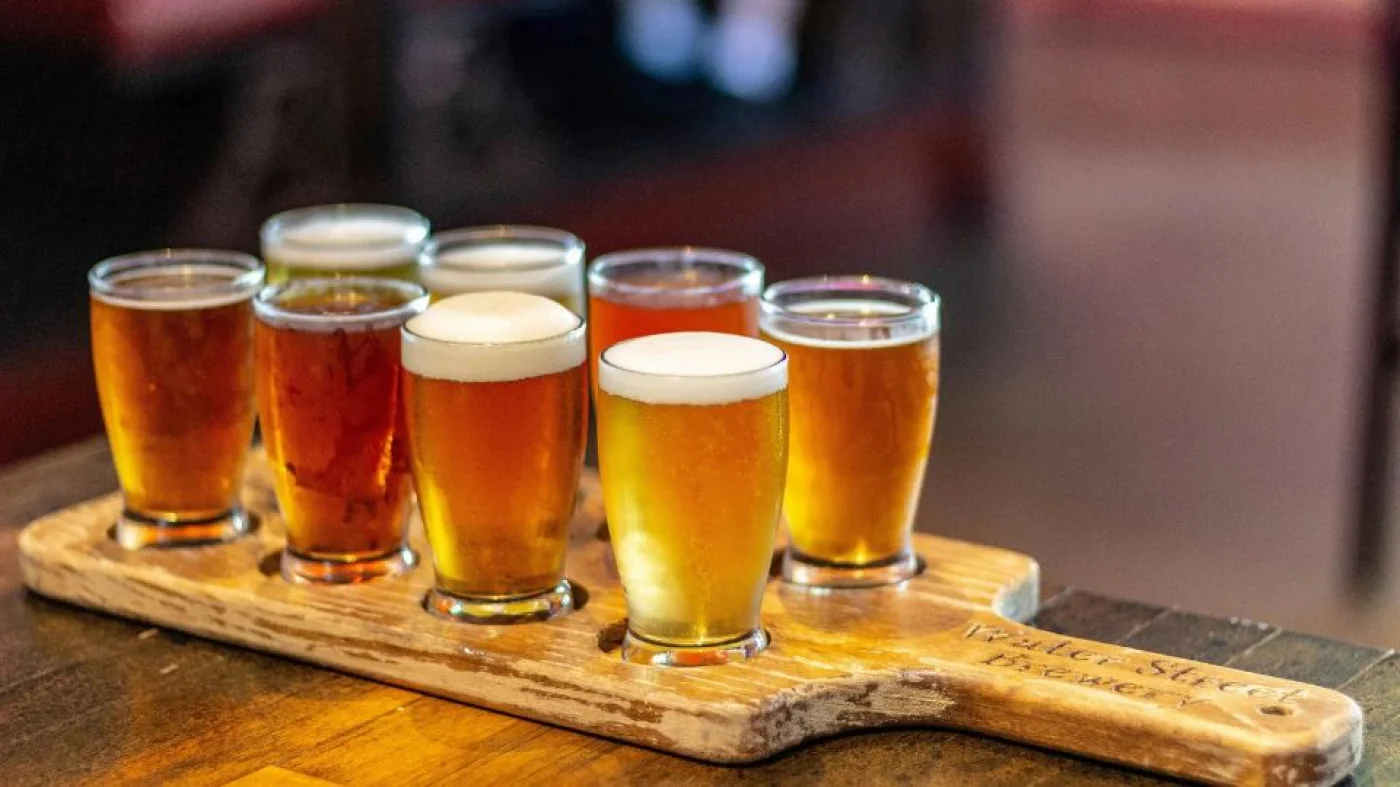
Have you noticed the craft beer taps appearing across Kathmandu's restaurants and Pokhara's lakeside bars? Nepal's brewing scene is growing, and entrepreneurs are asking the same question: how do I get a microbrewery license in Nepal? Here is the first thing you must understand—Nepal does not issue one single document called a "microbrewery license." Instead, a legal microbrewery is built by stacking several licenses together, each from a different authority.
A microbrewery license in Nepal is therefore a combination: an industry registration, an excise manufacturing license under the Excise Act 2058, a product label approval from the Department of Food Technology and Quality Control (DFTQC) under the Liquor Act 2031, and—for brewpubs that serve on premises—a municipal bar or restaurant license under the Local Government Operation Act 2074. Miss one layer, and the entire operation is illegal. In this complete guide, every layer is explained in plain language, with tables, timelines, fee ranges, and the mistakes that shut breweries down. By the end, you will know exactly what a legal craft brewery in Nepal requires.
The Concept: A License Stack, Not a Single License
In many countries, a brewer applies to one alcohol regulator and receives one brewer's license. Nepal works differently. Authority over alcohol is divided, and each layer of the stack answers a different regulatory question:
| Layer | Authority | The Question It Answers |
|---|---|---|
| Business entity | Office of Company Registrar | Who owns the brewery? |
| Industry registration | DOI / Cottage & Small Industries | Is this a legitimate industry? |
| Excise manufacturing license | Inland Revenue / Excise | Will the government track and tax every litre? |
| Label approval | DFTQC | Is the product safe and honestly labelled? |
| Bar/restaurant permit | Local municipality | May beer be served at these premises? |
| Local clearances | Ward, municipality, fire, environment | Is the location suitable and safe? |
A microbrewery that brews and sells under one roof—a brewpub—needs the full stack. A production microbrewery that only sells to distributors still needs everything except, in practice, the service-side permit, though distribution triggers wholesale licensing instead.
The Legal Framework Explained
Five laws govern every Nepali brewery. Understanding what each one does prevents most compliance failures.
| Law | Role in Brewing |
|---|---|
| Liquor Act 2031 (1974) | Requires a license to manufacture, bottle, sell, transport, or store liquor; sets the drinking age at 18; mandates approved labels and excise-fixed maximum retail prices |
| Excise Act 2058 & Excise Rules 2059 | Makes beer an excisable good; requires manufacturing licenses, duty payment, and government monitoring of production volumes |
| Food Act 2023 & Food Rules 2027 | Treats beer as a food product subject to quality and safety standards enforced by DFTQC |
| Industrial Enterprises Act 2076 | Requires industry registration and classification of the brewery as an industrial enterprise |
| Local Government Operation Act 2074 | Empowers municipalities to license retail sale, bars, and restaurants within their territory |
Under Section 4 of the Liquor Act, no person may manufacture, bottle, sell, transport, or store liquor for sale without a license. This single provision is why every layer of the stack exists.
License Type 1: Business Registration and Industry Registration
Every brewery begins as a legal entity. A private limited company is registered at the Office of the Company Registrar, followed by PAN and VAT registration at the Inland Revenue Department. One detail matters here: liquor is a forced-registration sector, so VAT registration is mandatory regardless of turnover.
The brewery is then registered as an industry under the Industrial Enterprises Act 2076. Larger breweries register with the Department of Industry; smaller and cottage-scale operations may register with the Department of Cottage and Small Industries. Industry classification determines the incentives, registration fees, and monitoring level that follow.
License Type 2: The Excise Manufacturing License — The Core of the Stack
The excise manufacturing license is the true heart of the microbrewery license in Nepal. Beer is one of the most tightly controlled excisable goods in the country, and the system around it is built on physical control.
What does physical control mean in practice? Nepal historically placed breweries under direct supervision: production volumes monitored at the tanks, transfers to storage tracked, and removals from the premises approved only after duty payment. In the modern system, breweries operate with flow meters installed on production lines, calibrated and networked to the Inland Revenue Department, which measures output electronically. Excise duty on beer is calculated on volume and strength, and every bottle or keg that leaves the brewery must carry evidence that duty was paid.
The practical obligations of a licensed brewery include:
- Installing and maintaining calibrated flow meters as directed
- Maintaining production, sales, and stock records open to excise officers
- Filing regular excise returns and paying duty before product release
- Selling only to licensed wholesalers, retailers, or permitted premises
- Purchasing and applying government excise stickers or banderoles where required by current rules
For a brewpub, one additional complication appears: beer brewed on premises and consumed on premises still attracts excise, and the metering and reporting obligations apply to that consumption as well.
License Type 3: DFTQC Product Registration and Label Approval
Before any beer is sold, its label must be approved by the Department of Food Technology and Quality Control under the Food Act and the Liquor Act. Every bottle must carry the DFTQC-approved label and the maximum retail price fixed under the excise regime.
Labelling requirements cover alcohol percentage, volume, ingredients, health warnings, and the manufacturer's details. For craft breweries that rotate seasonal beers, each new product or label variation requires its own registration—this is a recurring compliance task, not a one-time event.
License Type 4: Municipal Bar and Restaurant Licensing
A brewpub that serves its own beer to customers needs the service-side permits from its local municipality: a bar, restaurant, or hotel license under the Local Government Operation Act 2074, plus a business operating permit from the ward. Municipal rules add their own conditions. In Kathmandu Valley municipalities, for example, retail sale is prohibited within 50 metres of schools, colleges, hospitals, and religious places, and local dry days apply on festival evenings such as Holi and Gai Jatra. Election-period prohibitions apply nationwide.
The Small-Scale Exemption Explained
The Liquor Act contains one famous exception: no license is required to produce jaad (traditional fermented beverages such as raksi) in a prescribed quantity for personal consumption. This household exception does not extend to sale, and it does not comfortably cover a commercial microbrewery. A brewpub charging customers for beer is conducting licensed activity, full stop. Entrepreneurs who assume "small means exempt" discover otherwise during their first excise inspection.
Step-by-Step: Building Your Microbrewery License in Nepal
The full sequence, from idea to first legal pint, is laid out below.
Step 1 — Form the company. Register a private limited company at the Office of the Company Registrar with a name that does not conflict with existing brands.
Step 2 — Register for taxes. Obtain PAN and VAT certificates from the Inland Revenue Department. VAT is compulsory in the liquor sector.
Step 3 — Register the industry. Apply to the DOI or the Cottage and Small Industries Department for industry registration, describing the brewing activity, capacity, and location.
Step 4 — Secure the premises. Lease or purchase a location that satisfies municipal zoning—including the distance restrictions from schools and religious sites—and obtain the ward and municipal recommendations.
Step 5 — Apply for the excise manufacturing license. Submit the application through the concerned Inland Revenue Office with company documents, premises proof, equipment details, and the prescribed fee. An excise inspection of the facility follows.
Step 6 — Install and calibrate flow meters. The production line is metered and networked as required before commercial brewing begins.
Step 7 — Register each beer and label with DFTQC. Submit samples, recipes, and label designs for approval and pricing verification.
Step 8 — Obtain the municipal service license. For brewpubs, secure the bar or restaurant permit from the municipality and display all licenses at the premises.
Step 9 — Begin brewing under supervision. Production starts with records, returns, and duty payments running from day one.
Documents Required: The Complete Checklist
| # | Document | Layer |
|---|---|---|
| 1 | Company registration, MOA, AOA | Entity |
| 2 | PAN and VAT certificates | Tax |
| 3 | Industry registration certificate | Industry |
| 4 | Premises ownership or lease proof | Municipal |
| 5 | Ward and municipal recommendation letters | Municipal |
| 6 | Equipment list and brewery layout | Excise |
| 7 | Application form and fee for excise license | Excise |
| 8 | Water quality test report | DFTQC |
| 9 | Health certificates of food handlers | DFTQC |
| 10 | Label designs and product specifications | DFTQC |
| 11 | Fire safety and environmental clearances, where required | Local |
Costs and Timelines: A Realistic Picture
Government fees are set by rules and revised through annual budgets, so figures should be confirmed with the Inland Revenue Office before filing. The general pattern for the liquor sector is well established:
| Item | Typical Range (NPR) |
|---|---|
| Industry registration | Modest; scale-based |
| Excise manufacturing license (small/cottage scale) | Roughly 50,000 – 200,000 annually |
| Excise manufacturing license (large scale) | Roughly 500,000 – 2,000,000+ annually |
| Municipal bar/restaurant license | Roughly 10,000 – 100,000 annually |
| DFTQC product registration and testing | Per-product fees plus lab charges |
| Flow meter installation and networking | Equipment cost borne by the brewery |
Timelines depend heavily on inspection scheduling and document completeness. A realistic full-stack process, from company registration to first legal sale, runs between two and six months.
Foreign Investment: An Important Warning
Foreign investors should note that liquor manufacturing sits in sensitive territory under the Foreign Investment and Technology Transfer Act 2075 negative list, and bar and restaurant activities may also face restrictions. Prior written confirmation from the Department of Industry is essential before any foreign money enters a Nepali brewery project. Assuming eligibility and registering first is a costly error that has forced restructurings in other food and beverage sectors.
Penalties: What Illegal Brewing Costs
The law draws no distinction between an unlicensed industrial distillery and an unlicensed craft brewpub:
| Violation | Consequence |
|---|---|
| Manufacturing or selling liquor without a license | Up to 2 years imprisonment, fine up to NPR 25,000, and seizure of the liquor |
| Excise evasion or unlicensed production under the Excise Act | Fine equal to the evaded amount, imprisonment up to 1 year, or both |
| Equipment used in the offence | Subject to forfeiture—brewing systems can be seized |
| Sale to persons under 18 | Fines and licence cancellation on repeat |
| Adulterated or methanol-tainted product | Prosecuted under the Muluki Criminal Code, with imprisonment up to 10 years and victim compensation |
The forfeiture provision deserves emphasis: an illegal brewery does not merely face a fine. Its tanks, kettles, and kegs—the entire capital investment—can be confiscated.
Common Mistakes That Kill Microbrewery Projects
- Brewing before the excise license is issued, treating the application period as a soft launch
- Assuming cottage-scale registration avoids excise obligations entirely
- Forgetting that each seasonal beer needs its own DFTQC label registration
- Locating the taproom within a restricted zone near a school or temple
- Failing to budget for flow meters, record systems, and duty payments in the business plan
- Mixing foreign money into the project without clearing the FITTA negative list first
- Letting any annual license lapse—renewal failure alone is grounds for cancellation
Final Thoughts
The microbrewery license in Nepal is not one document but a disciplined stack: company, industry, excise, label, and municipal layers, each earned in sequence. Breweries that build the stack properly enjoy something rare—a defensible position in one of Nepal's fastest-growing hospitality niches. Breweries that skip a layer discover that the excise system was designed to find them.
If you are planning a craft brewery or brewpub and want the stack assembled correctly the first time, the legal team at Attorney Nepal Pvt Ltd can manage every layer—from industry registration and excise licensing to DFTQC approvals and municipal permits.
Planning your brewery? Contact Attorney Nepal Pvt Ltd today for a confidential consultation.
Legal Disclaimer
This article is provided for general informational purposes only and does not constitute legal advice. License fees, excise procedures, and municipal requirements are revised periodically and vary by location. For advice on your specific project, consult a licensed advocate in Nepal and confirm current requirements with the Inland Revenue Department, DFTQC, and your local municipality.
References
- Liquor Act 2031 — full text
- Nepal Law Commission — official source of Nepali legislation
- Department of Food Technology and Quality Control (DFTQC)
- Inland Revenue Department, Nepal
- Department of Industry, Nepal
- An Analysis of Legal Provisions on Alcohol Use and Advertising in Nepal — ResearchGate (2025)
Questions
Is there a single microbrewery license in Nepal?
No. A legal microbrewery stacks an industry registration, an excise manufacturing license, DFTQC label approvals, and— for brewpubs—a municipal service license.
Which law requires a brewery license in Nepal?
Section 4 of the Liquor Act 2031 makes a license mandatory for manufacturing, bottling, selling, transporting, or storing liquor for sale. The Excise Act 2058 adds the manufacturing and duty framework.
How much does a microbrewery license cost in Nepal?
Fees vary by scale and locality. Small-scale manufacturing licenses typically run from roughly NPR 50,000 to NPR 200,000 annually, with municipal service licenses adding roughly NPR 10,000 to NPR 100,000. Confirm current figures with the Inland Revenue Office and your municipality.
Can I brew beer at home in Nepal?
The Liquor Act exempts traditional jaad made in a prescribed quantity for personal consumption, but this exemption does not cover commercial beer production or any sale. A brewpub selling pints is fully licensed activity.
Can foreigners own a microbrewery in Nepal?
Liquor manufacturing faces restrictions under the FITTA negative list, and bar or restaurant activities may also be restricted. Written confirmation from the Department of Industry must be obtained before investing.
What are the penalties for brewing without a license in Nepal?
Up to 2 years of imprisonment, fines up to NPR 25,000, seizure of the liquor, and—under the Excise Act—additional fines equal to the evaded duty with possible imprisonment up to 1 year, plus forfeiture of equipment.
Do brewpubs pay excise on beer consumed on premises?
Yes. Beer is an excisable good regardless of where it is consumed, and production volumes are monitored through the excise control system.
How long does the full licensing process take?
With complete documents, two to six months is a realistic range from company registration to first legal sale, dominated by inspections and label approvals.
This article is for general informational purposes only and does not constitute legal advice. For advice on your specific situation, please contact Attorney Nepal directly.