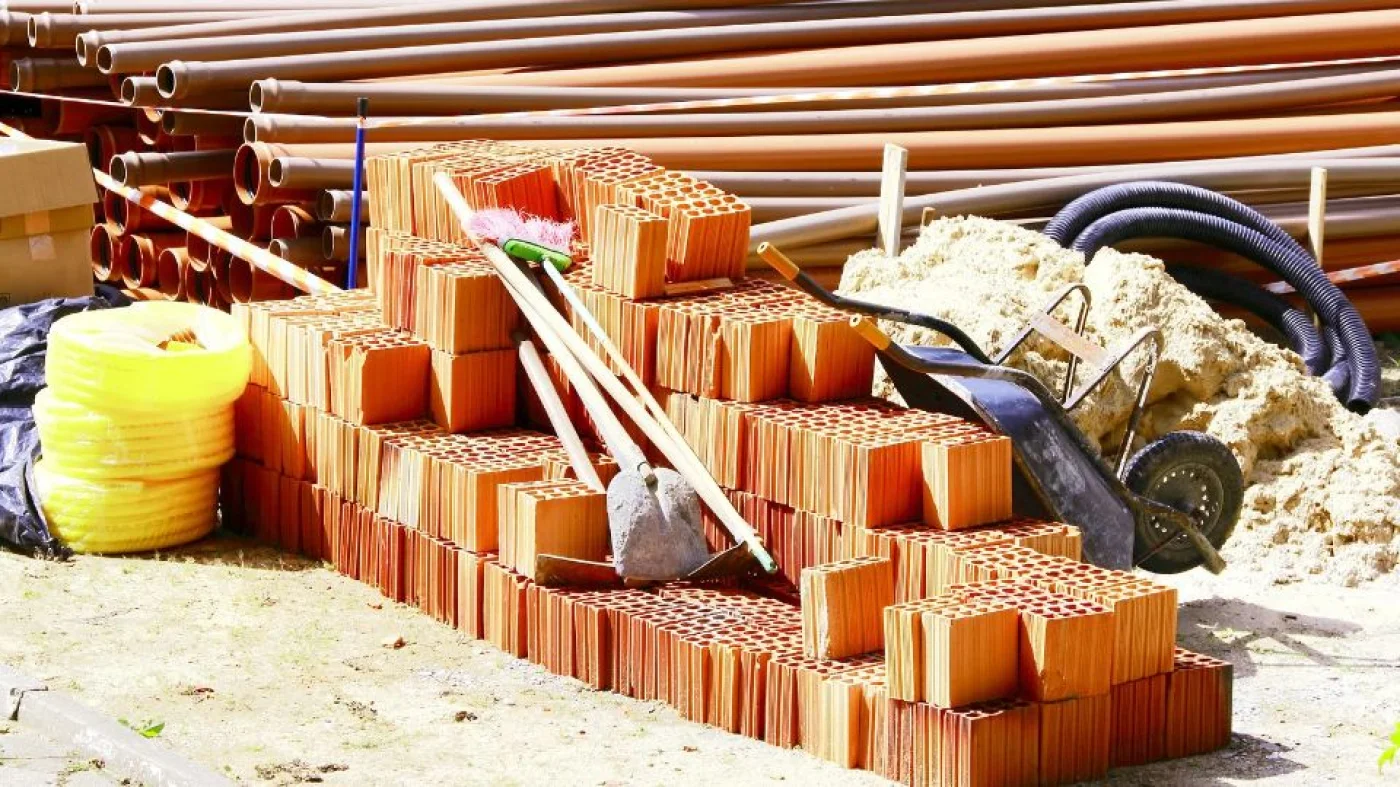
Construction material supply company registration in Nepal is the legal process through which a business is incorporated to trade cement, steel, sand, aggregates, bricks, hardware, and other building materials. The process is governed by the Companies Act, 2063 (2006) and is administered by the Office of the Company Registrar (OCR) through its online CAMIS portal.
Nepal's construction sector is growing steadily. As a result, demand for registered suppliers has increased in every province. Moreover, government contracts, bank loans, and corporate buyers now require a properly registered entity. Therefore, formal registration is no longer optional for serious traders.
This guide explains every step, document, fee, and compliance duty in plain language. It is written for entrepreneurs, contractors, and foreign investors who want a clear roadmap without legal jargon.
Why Construction Material Supply Company Registration in Nepal Matters
An unregistered supplier faces serious limits. For example, VAT invoices cannot be issued legally. Furthermore, public procurement bids are closed to unregistered firms. In addition, banks refuse business loans without company papers.
Conversely, a registered building material supply company gains the following advantages:
- Limited liability – Personal assets remain protected from business debts.
- Legal recognition – Contracts with contractors and developers become enforceable.
- Tax compliance – PAN and VAT registration enable formal invoicing.
- Banking access – Business accounts and credit facilities are unlocked.
- Tender eligibility – Government and private project bids become accessible.
Moreover, corporate buyers such as hydropower developers and construction firms prefer suppliers with valid registration, VAT bills, and tax clearance certificates. Consequently, registration directly affects revenue growth.
Legal Framework for Construction Material Trading in Nepal
Several laws apply to a construction material trading company. The table below summarizes the main ones.
| Law / Regulation | Authority | What It Covers |
|---|---|---|
| Companies Act, 2063 (2006) | Office of Company Registrar | Incorporation, governance, annual compliance |
| PAN Registration Rules | Inland Revenue Department | Tax identification and income tax filing |
| VAT Act, 2052 (1996) | Inland Revenue Department | VAT registration and invoicing |
| Local Government Operation Act, 2074 | Municipality / Rural Municipality | Trade license and local business registration |
| Industrial Enterprises Act, 2076 | Department of Industry | Industry registration (if manufacturing) |
| Labor Act, 2074 (2017) | Labor Office | Employment contracts and worker rights |
| Social Security Act, 2075 | Social Security Fund | Employee contribution registration |
| Foreign Investment and Technology Transfer Act, 2019 | Department of Industry / IBN | Foreign investment approval |
| Standards Act, 2037 | Nepal Bureau of Standards and Metrology | Quality standards for cement, steel, and other materials |
For a pure trading business, the Companies Act, 2063 and tax laws form the core. However, if materials are manufactured or processed, industry registration becomes mandatory as well.
Step-by-Step Construction Material Supply Company Registration Process in Nepal
The full company registration in Nepal is completed online through the CAMIS portal. Below, each stage is explained in order.
Step 1: Reserve the Company Name at OCR
Firstly, a unique name is reserved through the CAMIS portal at camis.ocr.gov.np. Three proposed names should be submitted in both English and Nepali.
The name must not duplicate an existing company. Furthermore, restricted or misleading words are prohibited. Approval is usually granted within 1 to 3 working days. Additionally, the approved name must be used for registration within its validity period.
Tip: A name like "XYZ Suppliers Pvt. Ltd." works well for hardware supply company registration in Nepal because it allows future product diversification.
Step 2: Draft the MOA and AOA
Secondly, the Memorandum of Association (MOA) and Articles of Association (AOA) are prepared.
The MOA must include a clear objects clause covering activities such as:
- Supply and distribution of construction materials
- Wholesale and retail trading of cement, steel, and aggregates
- Import and export of building materials
- Supply of hardware, plumbing, and electrical fittings
The AOA sets internal rules for share transfers, board meetings, and dividends. Both documents must be signed by every promoter on each page. Moreover, they should be drafted by a licensed legal practitioner to avoid OCR objections.
Step 3: Submit the Application Through CAMIS
Thirdly, the application is filed online. Company details, capital structure, promoter information, and director details are entered into CAMIS. Scanned documents are uploaded, and the government fee is paid electronically.
The OCR then examines the application. If errors are found, comments are issued. Subsequently, corrections must be resubmitted promptly. Common issues include mismatches between the MOA and the online form, or unsigned pages.
Step 4: Obtain the Company Registration Certificate
Once examination is completed, approval is granted. The company registration certificate is then issued electronically. This certificate confirms that the construction material supply company is a separate legal entity.
The entire incorporation stage typically takes 7 to 10 working days, provided documents are accurate.
Step 5: Complete PAN Registration
After incorporation, PAN registration is completed through the Inland Revenue Department. Under the current integrated system, the PAN is often generated automatically after OCR registration. However, verification with the IRD is still required.
PAN registration is mandatory before any commercial transaction or bank account opening.
Step 6: Register for VAT (If Required)
VAT registration becomes compulsory when annual turnover exceeds NPR 5 million for goods trading. Since construction material supply usually involves large volumes, most suppliers cross this threshold quickly.
VAT registration allows input tax claims on purchases. Therefore, it improves margins when materials are sourced from registered manufacturers.
Step 7: Obtain the Municipal Trade License
Finally, a trade license must be obtained from the local municipality or rural municipality where the business operates. The ward office registration, rental agreement, and company papers are submitted.
This license is renewed annually. Moreover, it is inspected during local tax audits.
Documents Required for Registration
| Document | Purpose | Copies |
|---|---|---|
| Name reservation approval | Proof of approved company name | 1 |
| MOA and AOA | Constitutional documents | 1 set (original) |
| Application form (Schedule 1, Companies Act) | Formal incorporation request | 1 |
| Citizenship copies of promoters/directors | Identity verification | 1 each |
| Passport and visa (foreign promoters) | Foreign identity proof | 1 each |
| Passport-size photos | CAMIS profile | 1 each |
| Office rental agreement or ownership proof | Registered address | 1 |
| Promoters' consensus agreement | Private company formation | 1 |
| Board resolution / Power of Attorney (if applicable) | Authorized representation | 1 |
| FDI approval letter (foreign investors) | Prior investment permission | 1 |
Cost and Timeline Overview
| Item | Estimated Cost / Duration |
|---|---|
| Name reservation fee | Approx. NPR 100 – 500 |
| Company registration fee (capital up to NPR 1 lakh) | NPR 1,000 (scales with capital) |
| Private company paid-up capital (practice standard) | Minimum NPR 1,00,000 |
| Notarization and document drafting | Varies by law firm |
| Total professional + government cost | Typically NPR 25,000 – 60,000 |
| Incorporation timeline | 7 – 10 working days |
| PAN registration | 1 – 3 working days |
| Municipal trade license | 3 – 7 working days |
Note: Fees are set by government schedules and may be revised. The figures above reflect current practice.
Post-Registration Compliance for Building Material Suppliers
Registration is only the beginning. Several ongoing duties must be fulfilled.
Tax Compliance
- Income tax returns must be filed annually.
- TDS must be deducted on rent, salaries, and contractor payments.
- VAT returns are filed monthly or every two months, depending on turnover.
- Tax clearance certificates should be renewed each fiscal year for tender eligibility.
Company Compliance
- A first board meeting must be held within three months of incorporation.
- Statutory registers (shareholders, directors, minutes) must be maintained.
- An annual general meeting (AGM) is required every year.
- The annual return is filed with OCR after the AGM.
- A statutory audit is mandatory for all companies.
Labor and Social Security
Under the Labor Act, 2074, employment contracts must be written. Furthermore, employees must be enrolled in the Social Security Fund within three months of hiring. Consequently, payroll records and contribution filings become monthly duties.
Foreign Investment in a Construction Material Supply Company
Foreign investors are permitted to own shares in a construction material trading company in Nepal, subject to approval. Under the Foreign Investment and Technology Transfer Act, 2019, prior approval from the Department of Industry (DOI) or the Investment Board Nepal (IBN) is required.
Key points are listed below:
- Minimum foreign investment is generally NPR 20 million for most sectors.
- Approval must be obtained before capital is injected.
- Capital must be remitted through a Nepali bank as equity.
- Repatriation of dividends is allowed after tax payment.
Moreover, foreign-owned suppliers benefit from full ownership rights in trading businesses, since this sector is not on the restricted list. Therefore, international building material brands often enter Nepal through a wholly-owned subsidiary.
Common Mistakes to Avoid
Several errors repeatedly delay construction material supply company registration in Nepal:
- Vague MOA objectives – Trading, supply, and import activities must be clearly listed.
- Name mismatch – The English and Nepali names must correspond exactly.
- Skipped VAT registration – Late registration leads to penalties and lost input credits.
- No trade license – Municipal inspection can halt operations.
- Poor share structure – Future investors cannot be added easily if the share structure is poorly planned.
These issues can be avoided when a licensed corporate lawyer handles the filing. Furthermore, professional drafting reduces OCR queries and shortens the timeline significantly.
Why Choose Attorney Nepal Pvt Ltd
At Attorney Nepal Pvt Ltd, over a decade of corporate practice has been dedicated to company registration, tax structuring, and licensing. Our team has assisted traders, contractors, and foreign manufacturers across all seven provinces.
The following services are provided under one roof:
- Name reservation, MOA/AOA drafting, and CAMIS filing
- PAN, VAT, and TDS registration
- Municipal trade license processing
- Industry registration and standards consultation
- Foreign investment approval (DOI/IBN)
- Annual compliance, audit coordination, and tax filing
Call to Action: Start your construction material supply company registration in Nepal today. Contact Attorney Nepal Pvt Ltd for a free consultation, a fixed-fee quote, and registration completed without delays.
Disclaimer
The information provided in this guide is for general educational purposes only. It does not constitute legal advice. Laws, fees, and government procedures in Nepal may change over time. For advice tailored to your specific situation, please consult a licensed attorney at Attorney Nepal Pvt Ltd. No attorney-client relationship is created by reading this content.
References
For verification and further reading, the following official and high-authority sources are referenced:
- Office of the Company Registrar (OCR), Nepal — https://ocr.gov.np
- CAMIS Online Company Registration Portal — https://camis.ocr.gov.np
- Inland Revenue Department, Nepal — https://ird.gov.np
- Department of Industry, Nepal — https://doi.gov.np
- Investment Board Nepal — https://ibn.gov.np
- Nepal Bureau of Standards and Metrology — https://nbsm.gov.np
- Companies Act, 2063 (2006) — Official Gazette of Nepal — https://lawcommission.gov.np
- Social Security Fund, Nepal — https://ssf.gov.np
- World Bank — Nepal Doing Business and Enterprise Surveys — https://www.worldbank.org
- Asian Development Bank — Nepal Infrastructure and Construction Sector Data — https://www.adb.org
Questions
How long does construction material supply company registration in Nepal take?
The process usually takes 7 to 10 working days after name approval. However, foreign investment approval or incomplete documents can extend the timeline.
What is the minimum capital required?
For a private limited company, the commonly applied minimum paid-up capital is NPR 1,00,000. The Companies Act does not fix a strict statutory floor, but this amount is followed in practice and affects registration fees.
Can one person register a construction material supply company?
Yes. A private company can be incorporated by a single shareholder under the Companies Act, 2063. The maximum number of shareholders is 101.
Is VAT registration mandatory for building material suppliers?
VAT registration becomes mandatory once annual turnover exceeds NPR 5 million for goods. Since material supply involves large transactions, most suppliers register early.
Can a foreigner own 100% of a construction material supply company in Nepal?
Yes, foreign ownership up to 100% is allowed in trading businesses. However, prior approval from the Department of Industry under FITTA 2019 is required, and minimum investment thresholds apply.
What documents are needed for company registration?
The main documents are the MOA, AOA, citizenship copies of promoters, passport-size photos, office address proof, and the name reservation approval. Foreign promoters must also submit passports, visas, and FDI approval.
Do I need a trade license from the municipality?
Yes. A trade license from the local municipality or rural municipality is required to operate physically. It is renewed annually and is checked during inspections.
What is the government fee for private company registration?
For authorized capital up to NPR 1,00,000, the registration fee is NPR 1,000. The fee increases with higher authorized capital slabs.
Is a construction license needed for a material supply business?
No. A construction license (under the Construction Business Act, 2055) is required for contractors who execute construction work. A pure material supply or trading company only needs company registration, PAN/VAT, and a municipal trade license.
What annual compliance is required after registration?
An AGM must be held, an annual return filed with OCR, a statutory audit completed, income tax and VAT returns submitted, and the municipal trade license renewed each year.
This article is for general informational purposes only and does not constitute legal advice. For advice on your specific situation, please contact Attorney Nepal directly.