
In Nepal's rapidly evolving digital landscape, social media page registration in Nepal has become a critical consideration for businesses and organizations. As online presence continues to gain importance, understanding the legal framework governing digital platforms is essential. The Nepalese government has implemented various regulations, including the Electronic Transactions Act 2063 and Information Technology Policy, which directly impact how social media compliance Nepal must be approached. This comprehensive guide explores the legal requirements, procedures, and best practices for registering and operating social media pages in Nepal, ensuring your digital presence remains compliant with national laws while maximizing business potential.
The Electronic Transactions Act 2063 serves as the foundational legislation for digital activities in Nepal. Under this act, any digital content, including social media pages, is subject to specific legal requirements. The act was established to regulate electronic transactions, provide legal recognition to digital signatures, and address cybercrime. For businesses operating social media pages, compliance with this legislation is mandatory.
Furthermore, the act stipulates that digital content must not violate Nepal's cultural norms, religious sentiments, or national security interests. Therefore, social media page registration in Nepal requires careful consideration of content guidelines to avoid potential legal repercussions.
Nepal's Information Technology Policy provides additional guidelines for digital operations within the country. This policy emphasizes the importance of digital literacy, cybersecurity, and the responsible use of digital platforms. For entities seeking business page registration Nepal, adherence to these policy guidelines is crucial.
The policy also encourages the digitization of government services and promotes e-governance initiatives, which indirectly affects how businesses must approach their online presence. As Nepal continues to develop its digital infrastructure, these policies are regularly updated to address emerging challenges in the digital space.
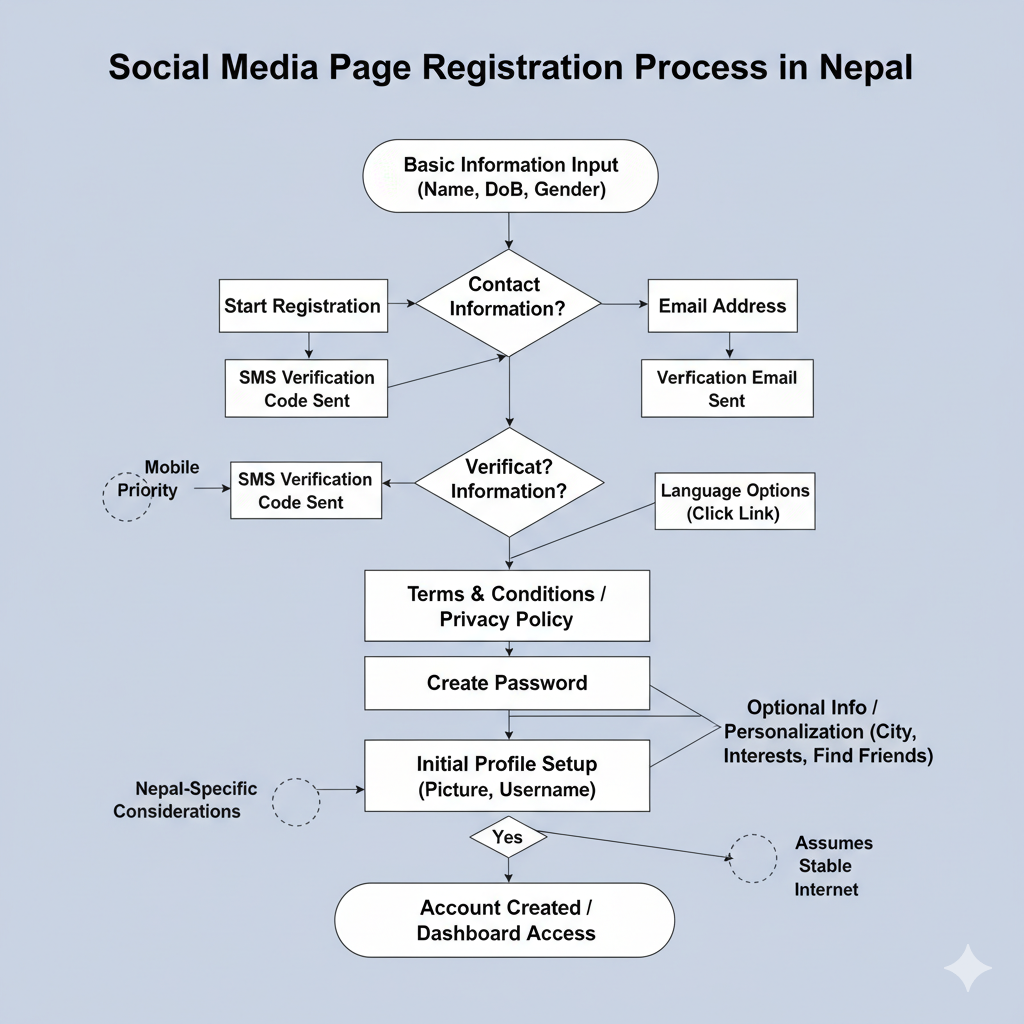
For commercial entities operating social media pages in Nepal, certain registration requirements must be fulfilled. First and foremost, the business must be legally registered under Nepal's Company Act or appropriate business registration regulations. This includes obtaining a PAN (Permanent Account Number) from the Inland Revenue Department, which is essential for online business legal requirements Nepal.
Additionally, if the social media page is used for commercial purposes, it may need to be registered with the Department of Industry or Department of Commerce, depending on the nature of the business. This registration process typically involves submitting business documents, identification papers, and details about the intended digital operations.
The digital business registration process in Nepal has been streamlined in recent years but still requires careful attention to detail. The following steps outline the typical procedure:
It should be noted that specific requirements may vary depending on the nature of the business and the social media platforms being utilized. For instance, Facebook page verification Nepal has its own set of requirements that must be met in addition to government registrations.
Facebook remains the most popular social media platform in Nepal, making Facebook page verification Nepal a priority for many businesses. The verification process serves to establish authenticity and build trust with the audience. To obtain verification, businesses must:
Once verified, businesses gain access to additional features and increased visibility on the platform. However, verification does not exempt businesses from complying with Nepal's social media law Nepal and other relevant regulations.
For commercial social media account operations in Nepal, several best practices should be followed to ensure compliance:
These practices not only ensure legal compliance but also build trust with the target audience and enhance the effectiveness of social media marketing efforts.
Under Nepal's legal framework, businesses are held responsible for the content published on their social media pages. The Electronic Transactions Act 2063 specifically addresses issues related to digital content, including:
Businesses must implement content moderation policies to ensure compliance with these regulations. Failure to do so may result in legal action, fines, or even the suspension of business operations.
While Nepal is still developing comprehensive data protection legislation, existing laws under the Electronic Transactions Act 2063 impose certain obligations regarding personal data. Businesses operating social media pages must:
As Nepal continues to develop its data protection framework, businesses operating social media pages should stay informed about evolving requirements and adjust their practices accordingly.
While Facebook page verification Nepal is often prioritized, businesses should consider verification across multiple platforms. The general verification process typically includes:
Each platform has its own specific requirements and verification criteria. For instance, Twitter's verification process differs significantly from Instagram's, despite both being owned by the same parent company.
Verification offers several advantages for businesses operating in Nepal's competitive digital landscape:
These benefits can significantly impact a business's digital marketing effectiveness and overall online presence, making verification a worthwhile investment for serious commercial entities.
Nepal's approach to regulating social media continues to evolve. Recent developments include:
These developments reflect Nepal's commitment to creating a safer and more regulated digital environment while still fostering innovation and growth in the digital sector.
Looking ahead, several trends are likely to shape social media compliance Nepal in the coming years:
Businesses operating social media pages in Nepal should proactively monitor these developments and adapt their strategies accordingly to maintain compliance and competitive advantage.
This table provides a comparative overview of the requirements across major social media platforms in Nepal, highlighting the need for platform-specific compliance strategies.
While not all social media pages require formal registration with government authorities, any page used for commercial purposes should be linked to a legally registered business entity. Additionally, certain types of businesses, such as financial institutions, educational institutions, and media organizations, may have specific registration requirements for their digital operations.
Penalties for non-compliance vary depending on the nature and severity of the violation. Under the Electronic Transactions Act 2063, penalties may include fines ranging from NPR 25,000 to NPR 100,000, imprisonment up to two years, or both. Additionally, social media platforms may suspend or delete non-compliant accounts, and businesses may face civil liability for damages caused by non-compliant content.
The verification process typically takes between 3-7 business days, assuming all required documentation is submitted correctly. However, during periods of high demand or for complex cases, the process may take longer. Businesses should ensure all documentation is accurate and complete to avoid delays.
Yes, online businesses operating social media pages in Nepal must comply with several specific requirements, including:
Digital business registration in Nepal follows a similar process to traditional business registration but includes additional steps specific to online operations. These may include:
Businesses operating social media pages in Nepal are subject to the same tax regulations as other businesses, including:
Proper record-keeping of all digital transactions is essential for tax compliance purposes.
As Nepal's digital economy continues to grow, social media page registration in Nepal remains a complex but manageable process for businesses that approach it with proper preparation and understanding. By adhering to the legal requirements outlined in the Electronic Transactions Act 2063 and other relevant regulations, businesses can establish a strong digital presence while maintaining compliance with national laws.
The key to successful social media compliance Nepal lies in staying informed about regulatory developments, implementing robust internal policies, and seeking professional legal guidance when necessary. As the digital landscape continues to evolve, businesses that prioritize compliance and ethical digital practices will be best positioned to leverage the opportunities presented by social media platforms.
For personalized assistance with social media page registration in Nepal or other digital compliance matters, contact our legal team today. Our experts specialize in Nepal's digital law landscape and can provide tailored guidance to ensure your social media presence is both effective and compliant.
If You want To Open Travel Agency Also Read
Citations and References:
This article is intended for informational purposes only and does not constitute legal advice. For specific legal guidance regarding social media page registration in Nepal, consult with a qualified legal professional familiar with Nepal's digital law landscape.
 November 01, 2025 - BY Admin