
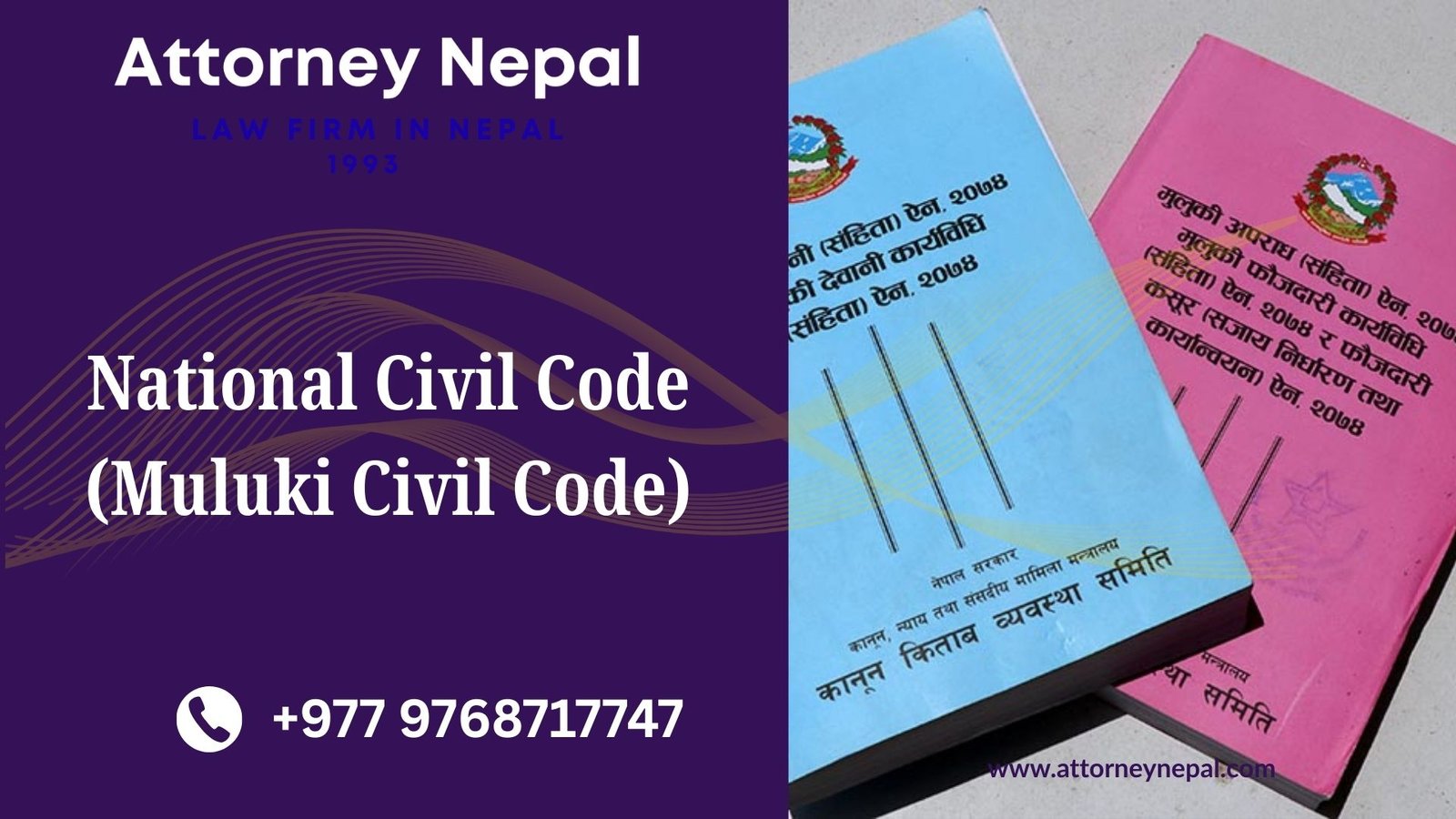
Nepal’s private law system changed forever in 2017. With one legislative move, centuries-old traditions, scattered statutes, and judge-made practices were unified into a single, enforceable civil law framework. The result was the National Civil Code—a law that now governs everyday life, from marriage and divorce to contracts, property, inheritance, and tort liability.
Whether you are a citizen, business owner, lawyer, or foreign investor, understanding the Muluki Civil Code is no longer optional. It directly affects your rights, duties, and legal remedies.
Let’s break it down—clearly, practically, and without legal fog.
The National Civil Code 2074 is Nepal’s primary private law statute, enforced from 17 August 2018 (1 Bhadra 2075). It replaced the old Muluki Ain of 2020 B.S. and consolidated civil laws into a modern, rights-based legal system.
In simple terms, it governs:
Personal relationships
Property and inheritance
Civil contracts and obligations
Compensation for civil wrongs
If a dispute is not criminal, this Code almost always applies.
The old legal system was outdated, fragmented, and often discriminatory. Nepal needed a civil code that matched:
Constitutional values
Human rights standards
Modern commercial realities
The Muluki Civil Code was introduced to:
Ensure gender equality
Protect individual autonomy
Standardize civil transactions
Reduce judicial inconsistency
This Code is not just a law—it is a legal reset.
The Code is systematically divided into Parts, Chapters, and Sections, making it far more accessible than earlier laws.
Personal law (family and relationships)
Property and ownership
Obligations and contracts
Tort and compensation
Limitation and legal capacity
Each chapter operates independently but follows unified principles.
The Code recognizes marriage as a legal and social contract.
Key provisions include:
Minimum age of marriage: 20 years
Consent of both parties is mandatory
Monogamy is the rule; polygamy is prohibited
Equal legal status of husband and wife
Marriage registration is strongly emphasized for legal validity.
Divorce is no longer stigma-driven—it is rights-based.
Grounds for divorce include:
Mutual consent
Cruelty or violence
Desertion
Mental or physical incapacity
The Code ensures:
Fair division of property
Maintenance and alimony rights
Protection of children’s interests
One of the most progressive aspects of the Code is gender equality.
Women now have:
Equal inheritance rights
Independent property ownership
Full contractual capacity
Children’s rights are protected through:
Guardianship rules
Maintenance obligations
Best-interest principles
Property law under the Muluki Civil Code is detailed and precise.
Movable property
Immovable property
Joint property
Ancestral property
Ownership can arise through:
Purchase
Inheritance
Gift
Partition
Unregistered ownership claims carry weak legal protection.
Inheritance is governed by clear statutory succession rules.
Key highlights:
Equal rights for sons and daughters
Spouse recognized as a primary heir
Legal process for partition of ancestral property
Testamentary succession (wills) legally recognized
This removed decades of ambiguity and discrimination.
Contracts are the backbone of commerce—and the Code modernized them completely.
A contract must have:
Free consent
Lawful object
Legal capacity of parties
Consideration
Oral contracts are recognized, but written contracts carry stronger evidentiary value.
When a contract is breached, the aggrieved party may claim:
Specific performance
Compensation for loss
Contract termination
Punitive damages are not common—but actual loss is compensable.
The Muluki Civil Code formally codified tort law in Nepal.
Civil wrongs include:
Negligence
Defamation
Nuisance
Trespass
A person causing harm is liable to compensate even without criminal intent.
This has major implications for:
Businesses
Medical professionals
Property owners
Not all rights last forever.
The Code prescribes strict limitation periods for filing civil cases. Missing the deadline can permanently bar your claim—no matter how strong it is.
Understanding limitation is crucial before initiating any lawsuit.
The Muluki Civil Code operates under:
Constitution of Nepal
Judicial interpretation by the Supreme Court
Where conflicts arise, constitutional principles prevail.
Courts increasingly rely on this Code to deliver predictable and consistent judgments.
For businesses, the Code provides:
Predictable contract enforcement
Defined liability standards
Clear compensation rules
Foreign investors benefit from:
Legal certainty
Standardized private law framework
Enforceable civil remedies
This has improved Nepal’s legal credibility.
Let’s clear a few myths:
❌ It applies only to families → False
❌ Old customs override it → False
❌ Verbal agreements have no value → False
❌ Women still lack inheritance rights → False
The Code overrides conflicting customs and practices.
The Muluki Civil Code is detailed—but not self-executing. Interpretation by courts and lawyers shapes how it works in practice.
A poorly drafted contract or misunderstood property right can still cost you years in litigation.
Legal advice is not a luxury here—it’s protection.
The National Civil Code (Muluki Civil Code) 2074 is not just for lawyers or judges. It governs marriage decisions, property ownership, business contracts, inheritance planning, and civil disputes—often without people realizing it.
If you live, work, invest, or do business in Nepal, this Code is already affecting you.
The smartest move? Understand it before you need it. Consult a legal professional, review your agreements, and align your decisions with the law—not after a dispute arises, but before.
That’s how the Muluki Civil Code is meant to work: not as a punishment, but as a framework for certainty, fairness, and justice.
 February 04, 2026 - BY Admin